Getting Your Lunge Back: Borrowing Strength to Rebuild Trust
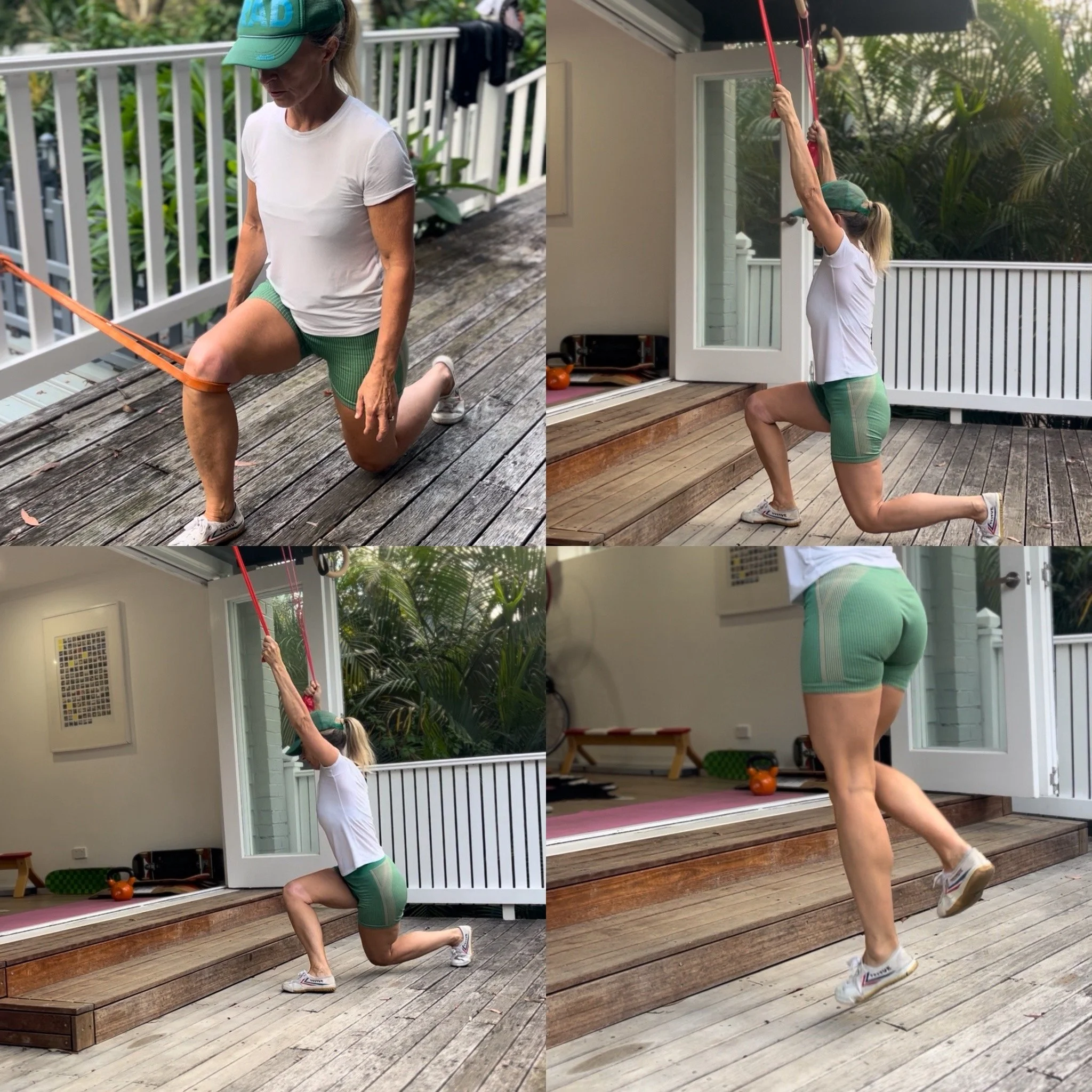
There’s a moment in recovery where strength isn’t the issue anymore — but the movement still isn’t there.
That’s where I found myself with lunges after ACL rehab.
Technically, I could do them. But they felt hesitant, heavy, and disconnected from the natural rhythm of walking and running.
Because a lunge isn’t just strength.
It’s coordination, confidence, and a subtle elasticity — that spring that carries you forward.
Instead of pushing through it, I changed the environment.
By using resistance bands anchored to rings, I created a system where my upper body could assist my lower body. This did two important things:
First, it reduced the load on the knee just enough to remove the threat.
Second, it introduced a rebound effect — the bands added a gentle “bounce” at the bottom of the movement.
That bounce is more powerful than it looks.
It reintroduces elasticity. It reminds your nervous system that movement doesn’t have to be slow, rigid, or protective.
It can be dynamic again.
This isn’t about making the exercise easier.
It’s about making the movement accessible again — so your body is willing to do it.
From there, everything builds:
Control → Confidence → Spring → Function.
Because walking, running, climbing stairs — they all rely on that same lunge pattern.
And sometimes, getting it back isn’t about grinding harder.
It’s about getting smarter with the signal you send.
Same body.
New signal.
And suddenly, the movement returns.